

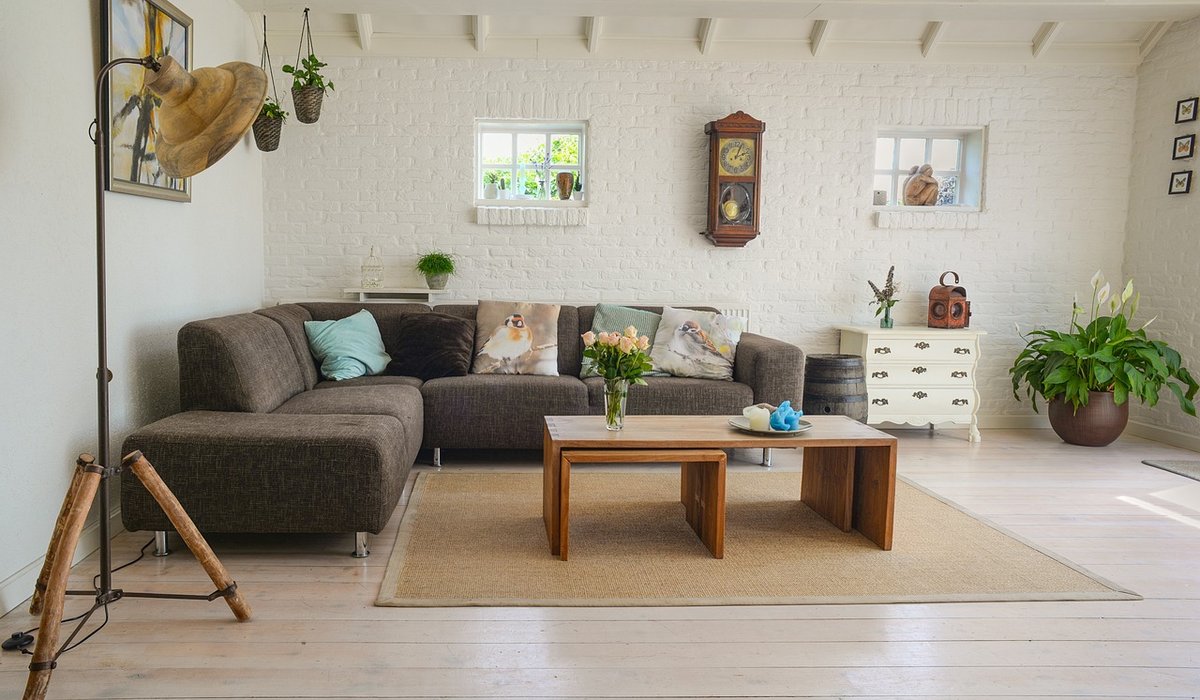
Layering Natural Textures for Warm and Inviting Rooms
There is a particular hour in a British winter afternoon when the light drops to a soft grey and a room either holds you or doesn't. It rarely comes down to the colour scheme. It comes down to what your hand finds when you reach for a cushion, what your feet meet when you step out of bed, and whether the surfaces around you look as though they have been gathered over time rather than bought in an afternoon. Layering natural textures is the quiet craft behind that feeling — depth without clutter, warmth without weight.
Why Texture Matters More Than Pattern
Pattern is read from across the room; texture is felt from the sofa. That is why a scheme with four different prints can feel busy and strangely flat, while a room in three shades of oatmeal can feel endlessly interesting. The eye wants something to linger on, and a slubby linen weave, the nap of a wool throw or the knots in an aged oak board give it somewhere to rest.
The rule of thumb worth remembering is contrast, not quantity. One fine weave next to one chunky knit next to one smooth surface is a complete sentence. Add a fourth texture of the same weight and the room starts to mumble. Keep your palette to two or three tones — chalk, clay, moss, walnut — and let the materials do the talking.
Begin at the Floor with Jute, Wool and Warm Timber
Floors set the tone before anything else registers. In a sitting room or bedroom, a natural fibre rug over bare boards instantly softens sound and sight. Jute and sisal bring a dry, matte, slightly rustic quality; wool brings warmth and a little bounce underfoot.
- Use a large jute or sisal rug as the base layer, then a smaller wool rug or sheepskin laid at an angle or offset to one side.
- A wool underlay beneath a wool rug is worth the expense — it stops the rug creeping on floorboards and makes a noticeable difference to warmth.
- Leave 20–30cm of bare floor visible around the edges of a rug in a small room. It sounds counterintuitive, but it makes the space read as larger.
- Match the rug to your timber rather than fighting it: cool grey jute lifts pale ash boards, while warm ochre jute sits happily with old pine.
Build the Soft Middle with Linen, Cotton and Sheepskin
This is where cosiness actually lives — the layers you touch. Start with curtains, because they frame the light. Washed linen hung to the floor, lined or unlined, gives a room a softness that no blind quite manages.
On seating, think in threes but of different weights. A heavyweight washed linen cushion (around 200gsm) holds its shape and looks relaxed rather than crisp. A lambswool or merino throw folded over an arm, not draped artfully across the whole back, invites use. A sheepskin on a wooden chair or at the foot of a bed adds a shot of luxury that costs very little compared with reupholstery.
Wool-filled cushion pads are worth seeking out over synthetic ones — they keep their loft, breathe, and give that satisfying plumpness when you sink into them.
Weave in Rattan, Cane and Aged Wood for Quiet Structure
Softness on its own can drift towards shapelessness. This is where woven and aged materials earn their place: they add structure and a little geometry without introducing hard, shiny modern edges.
A rattan pendant shade over a dining table, a cane-backed chair in a corner, a stack of woven baskets beside a fireplace, a reclaimed elm stool used as a side table — each one gives the eye a break from fabric. Aged wood works the same way, particularly when it sits next to something smoother: a rough-hewn bowl on a polished ceramic dish, or a weathered bench against a painted wall.
Keep it to two or three structural pieces per room. More than that and you tip from collected into themed.
Mix Scales So Nothing Looks Styled
Deliberate variety in scale is what separates a layered room from a showroom display. If every texture in sight is a variation on a medium weave, the effect is monotony. Aim for a fine linen, a chunky boucle or cable knit, and a smooth surface such as glass, stoneware or polished metal within the same view.
Symmetry also reads as styling. Two identical lamps either side of a sofa, both with linen shades, both with matching cushions, can feel staged. Try one lamp and one candle, one large cushion and one small, and let the arrangement sit slightly off-centre.
Edit Ruthlessly and Rotate Through the Year
The final step is subtraction. Walk into the room, look at each surface, and take one thing away. Clear a bit of the mantel. Leave a shelf half empty. Visible gaps are what allow texture to register at all.
Then treat your layers as seasonal rather than permanent. In late spring, strip back to linen, cotton and jute, with a single light wool throw for cool evenings. Come October, bring in the sheepskins, the heavier throws, the wool rug and the extra cushion or two. Rotating what you already own — rather than buying more — keeps a home feeling alive and keeps the clutter at bay. That is slow living in practice: fewer things, chosen well, moved gently with the year.


Home Comforts
-
Discover hardy lavender, sedum and rosemary that thrive in dry borders and need little watering once they are established.


Seasonal Living


-

Long established fact that a reader will be distracted
-

Long established fact that a reader will be distracted
-

Long established fact that a reader will be distracted


Garden Ideas
Karla Gleichauf
12 May 2017 at 05:28 pm
On the other hand, we denounce with righteous indignation and dislike men who are so beguiled and demoralized by the charms of pleasure of the moment
M Shyamalan
12 May 2017 at 05:28 pm
On the other hand, we denounce with righteous indignation and dislike men who are so beguiled and demoralized by the charms of pleasure of the moment
Liz Montano
12 May 2017 at 05:28 pm
On the other hand, we denounce with righteous indignation and dislike men who are so beguiled and demoralized by the charms of pleasure of the moment